


Design
We develop optimized products through a systematic process, ranging from market and technology trend analysis to concept design, DFMEA, detailed structural design, and virtual verification.
Market & Technology
Trend Analysis
Concept Design
DFMEA
Design &
DMU Kinematics
Fields of Technology
Developing advanced storage mechanisms, air vents, and battery pack valve technologies to enhance space efficiency and functionality.
High-efficiency optics and dynamic lighting, engineered for ambient atmosphere and uniform illuminance

Development of diverse geometric textures and advanced material patterns.
Electrification of various component mechanisms through proprietary design technology based on electronic integration.
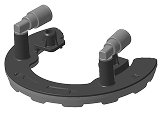
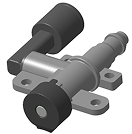
Sensor cleaning and integrated spray systems designed for autonomous driving.
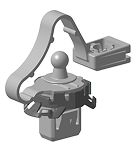
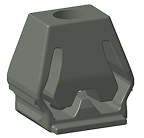
Optimized fastening technology combining lightweight design with structural integrity.
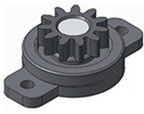

Variable damping control technology based on damper load and oil viscosity characteristics.
Verification
Design suitability validation through analysis, simulation, and product testing
Defining Validation
Goals & Requirements
Geometric Modeling &
Pre-processing for Analysis
Execution of Analysis &
Validation
Rapid Prototyping &
Proof of Concept
Analysis & Validation

Validating flow rate, velocity, and pressure characteristics within discharge ports and internal channels.
Assessing structural integrity by analyzing stiffness, stress, and vibration characteristics under external load conditions.
Ensuring operational stability by verifying the sequential movement of mechanisms and components
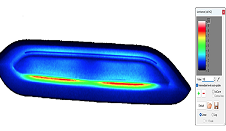
Optimizing lighting efficiency and luminous distribution through loss factor analysis.
Validating material flow and shrinkage characteristics by optimizing molding conditions and flow balance.
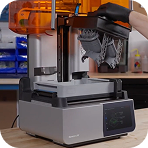
Verifying assembly , structural interference, operating principles, and visual design.
Mold
The process of fabricating, adjusting, and assembling molds based on 3D designs.
Mold Design
(CAD/CAM)
Mold Machining
Mold Measurement &
Inspection
Mold Assembly
Mold Technology
Precision Mold Design based on Molding Analysis
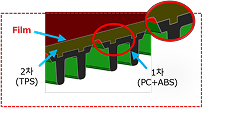

In-Mold Film Insertion & Multi-Material Bonding
Evaluation
Systematically validating product performance and design through rigorous testing and data analysis.
Test Planning
Test Preparation
Test Execution
Data Analysis &
Feedback
Test & Validation
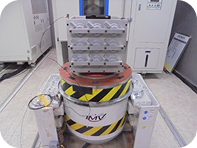
Combined Environmental Vibration Test : Reservoir Tank Assembly
Random Vibration Test : Combo Valve Assembly
Spot Sine Vibration Test : Air Vent Assembly
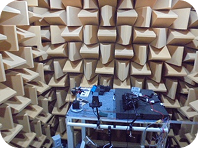
Quantitatively and qualitatively evaluate the operating noise of the electric mechanism and air vent, and verify emotional quality through timbre analysis
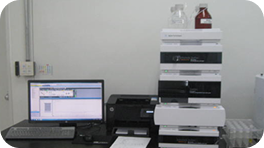
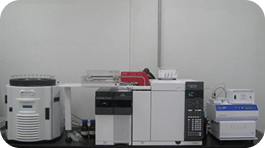
High-Performance Liquid Chromatography
Separation, identification, and quantification of VOCs in liquid samples.
Gas Chromatography-Mass Spectrometry
(GC-MSD Analyzer)
Separation, identification, and quantitative / qualitative analysis of gas-phase VOCs.
(HKMC SPEC : MS300-55, MS300-57)
Digital Microscopy (VHX-X1)
Detection of defects such as PCB soldering cracks and voids.
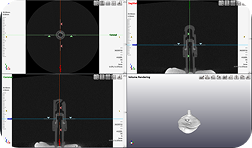
CT Scan Analysis (NAOMI-CT)
Verification of internal geometry and porosity analysis for products such as nozzles.
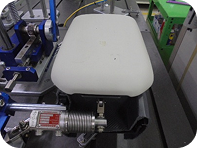
Evaluation of structural reliability and operational force variations through durability testing of moving components under various environmental conditions.